Our History
Our History
From our origins in 1957 up to the present day, we are a congregation that is growing, thriving and living into our mission of being a beacon of liberal religious values in Louisville and beyond. We began with the name “Thomas Jefferson Unitarian Church” and more recently transformed into “All Peoples Unitarian Universalist Congregation.”
Late 1950s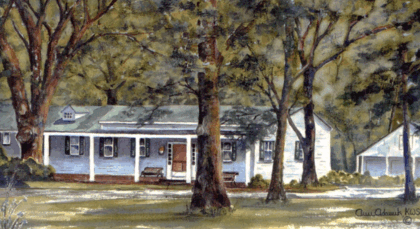
In 1957, First Unitarian Church of Louisville bought over nine acres of land on Old Brownsboro Road to establish a “suburban chapel,” recognizing Metro Louisville’s growing population shift to the suburbs. Sunday services began in the farmhouse, a structure still present behind the current church building and sanctuary.
1961
“Thomas Jefferson Unitarian Church” was officially recognized by the American Unitarian Association in 1961. The congregation quickly became publicly identified with the Civil Rights movement as our members passed a resolution calling for racial integration of Louisville area businesses. Our first minister, Rev. Carl Ulrich, was among the many Unitarian Universalist ministers who traveled to Selma, Alabama in 1965 to support those marching for voting rights with Dr. Martin Luther King Jr.
1969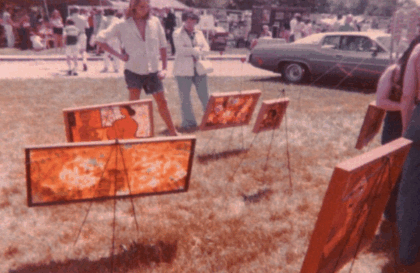
“Art in the Arbor,” an outdoor art show hosted on our grounds, was launched to support local craftspeople and artists, and to raise funds for the church. This event grew over time to become a well-attended annual spring celebration of the arts for the Louisville community.
1973
Rev. Reid Bush became our fourth minister and church membership grew to over 80 people.
1977
Rev. Bush resigned after it was revealed that he engaged in ministerial misconduct. Concerns about his departure led to a drop in membership and severe financial difficulties for the congregation. There was talk of closing our doors, but our Board voted to remain open, and our remaining members resolved to rebuild the congregation.
1987 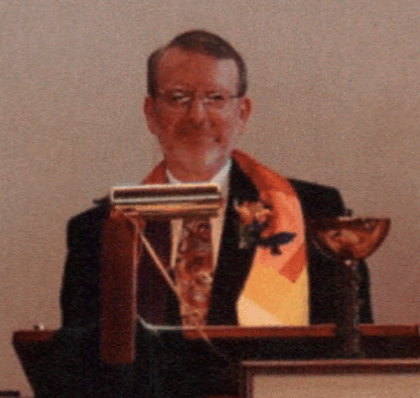
Rev. Elwood Sturtevant came to our church as “extension” minister, with financial support from a program of the Unitarian Universalist Association. Our congregation had 64 members, 25 children, and a budget of $39,997.
1988
A new choir combining men’s and women’s voices was formed.
1989
Our congregation officially adopted its first Covenant, a statement expressing the shared vision and values of our community. The Mabel Weeter Memorial Garden was dedicated. We became the first organization in Kentucky to offer a public showing of the controversial and widely-censored film “The Last Temptation of Christ.”
1990
We experienced significant growth in membership with 71 children and youth enrolled in religious education programs. Because of the limited space in our church building at the time, an area including the carport behind the farmhouse was used for Sunday morning programming. Our congregation joined with the Presbyterian Church USA and the United Church of Christ as a “friend of the court” in a case involving the constitutionality of Kentucky’s sodomy law.
1991
A capital fund drive for building expansion was authorized. “Winter Fair,” an annual showcase of local artisans and artists began, and continues to be a highlight of each church year to this day.
1993
A new wing was constructed to the church building containing classroom spaces for our children and youth. Rev. Sturtevant was officially called as our settled minister.
1994
Our Endowment Fund was created to fund church projects such as power-assist accessible main entrance doors.
1995
Our members voted to endorse and participate in the Kentucky Fairness Campaign’s efforts to end employment discrimination on the basis of sexual orientation in our state.
1996
Our congregation was offered a sizeable amount to sell our property to a commercial business. The congregation voted to reject this offer and to maintain our current location.
2000
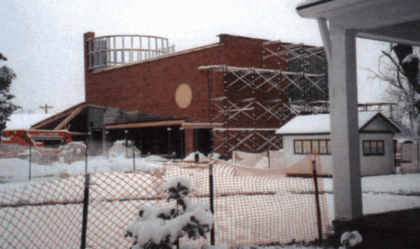
Our church was officially recognized as a “Welcoming Congregation” by the Unitarian Universalist Association because of our efforts to welcome and celebrate participation by people of all sexual orientations and gender identities. Ground was broken on a number of new building projects that greatly expanded our church facilities, including a new sanctuary, nursery, playground and courtyard.
2001
Members and friends of our congregation offered assistance and care to four orphaned children from Sudan as they came to settle in Louisville. We hired our first paid Music Director.
 2002
2002
Our current Sanctuary was officially opened and dedicated. The “Dorzback Chapel” was opened in the farmhouse to host wedding ceremonies for those in our local community whose relationships were not honored by other religious institutions, including same-sex couples and interfaith marriages. After some members visited an orphanage in Vihiga, Kenya, our Social Justice Committee started the Kenyan Education and AIDS Project (KEAP). For over 16 years, church members offered ongoing financial support to a large group of highly vulnerable children, many of who had lost their parents to HIV.
2004
Our congregation was recognized by the Unitarian Universalist Service Committee for our outreach and advocacy work, both locally and internationally.
2005
Church member Debby Sublett was awarded the “Social Action Leadership Award” at our denomination’s annual General Assembly. That same year, our UU Association approved an Action of Immediate Witness titled “Fair Trial for Dr. Sami Al-Arian” which was presented by church member Dennis Neyman.
2006
We celebrated Rev. Sturtevant’s 20th year as our minister and our Endowment Fund reached over $100,000 in a related campaign.
2007
In partnership with Kentucky Refugee Ministries, our congregation expanded its support of local refugee families.
2008
Barb Friedland became our Director of Religious Education. Improvements were made to make our church building more accessible and compliant with the American with Disabilities Act.
2009
We were recognized as Kentucky’s first “Green Sanctuary Congregation” by Unitarian Universalist Association for our commitment to environmental awareness, and as a “Red Ribbon Congregation” by the UU Global AIDS Coalition for our work with orphans in Kenya.
2010
Our congregation celebrated its 50th Anniversary. The “Founders Court” was dedicated in the circle area in the parking lot outside the front doors of the church. This area features memorial bricks donated by church members and friends.
2011
Our Endowment Fund Legacy Society was created. The Hearth Room was remodeled and renovated.
2013
“Spirituality U” began in conjunction with Interfaith Paths to Peace. We joined with group Compassionate Louisville as a partner organization.
2014
We celebrated that our bank mortgage was paid in full. Our church was certified as “Cool Congregation” by Kentucky Interfaith Power and Light in recognition of our efforts to be environmentally sustainable.
2015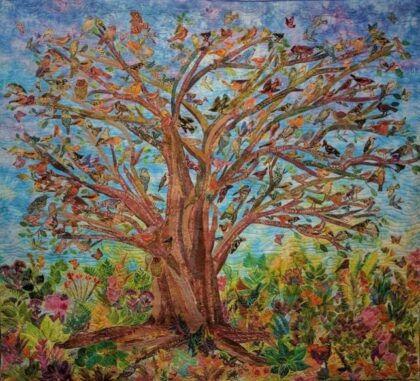
A 102″ x 110″ appliqued quilt entitled “Together We Grow” was created by church members Pat Sturtzel and Lori Sargent and was installed in our sanctuary. A paved walkway to Memorial Garden was added. Solar panels were installed on the roof of the church as part of an expanded campaign to make our congregation more environmentally sustainable and aware. Over the years, additional rows of panels have been added to decrease our use of carbon based energy, thanks to generous donations from church members and friends.
2016
A carved artwork titled “The Welcome Table” was donated by long-time church member Ann Dorzback and her family. It was dedicated and installed above the doors to the sanctuary.
2017
The barn located in the back of the church property burned to the ground. Fortunately, no other structures were damaged.
2018
Rev. Elwood Sturtevant retired after 31 years as minister. Nearly $600,000 was raised in a 3-year Capital Campaign to finance needed facility repairs, accessibility upgrades, and the formation of our Justice Center. In August of 2018, Rev. Jeff Liebman began a one-year interim ministry.
2019
Rev. Kathy Hurt began a two-year interim ministry. Our congregation installed a “Black Lives Matter’ sign on Brownsboro Road and held workshops with Showing Up for Racial Justice (SURJ). Our Social Justice Committee endorsed The Salaam Network in its efforts to confront Islamophobia and our congregation hosted public meetings on immigrant justice. Our members began a series of discussions about changing the congregation’s name because of its association with the racist ideas and actions of Thomas Jefferson.
2020
The Covid pandemic forced all church services, programs and activities to be held online for over a year and a half. Rus Funk began serving as the director of our All Peoples Justice Center. Dr. Katie Calcamuggio Donner began serving as our Music Director. Dr. Chris Brody began serving as our church pianist. Brody Brennick began serving as our Audio Visual Technician.
2021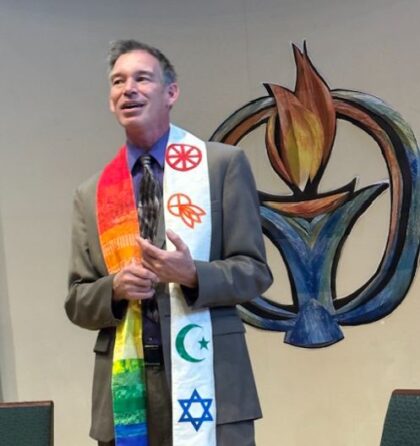
Our members officially voted to change the church’s name to “All Peoples-a Unitarian Universalist Congregation” as part of our efforts to grow into a more diverse, multi-cultural beloved community. In May of 2021, All Peoples members voted to call Rev. Bruce Beisner to serve as our settled minister.
2022
A new entrance was constructed to the church and dedicated. All Peoples began a 2-year involvement with the Unitarian Universalist program known as “Beloved Conversations” which was aimed at re-imagining church life to embrace and expand our identity as a diverse and multi-cultural community for all ages. Church members participated in public protests and advocacy work to support Bernheim Forest in their ongoing battle to stop a pipeline development in their property. We welcomed “The Gathering Club” as long-term renters of our church space. This group provides daytime care for adults with developmental disabilities.
2023
Our Sunday morning services began to embrace a more energized spirit with increasingly diverse musical offerings, guest speakers from a variety of backgrounds, and many visual and multi-media presentations. Church members began involvement with the Cofan Relief Fund which offers support and resources to members of an indigenous tribe in Ecuador. The church’s long-standing monthly newsletter known as “The Tapestry” was transformed into a quarterly magazine featuring poems, essays, reflections and artwork by church members. Major physical improvements were made to the Farmhouse and it was renamed the All Peoples Justice Center.
2024
All Peoples welcomed a record number of visitors and new members to our congregation and Family Ministry programs for children and youth were expanded to accommodate new families who had begun participating in church life. Regular gatherings began to celebrate earth-centered holidays throughout the year. All Peoples members participated in the nationwide “UU the Vote” campaign to encourage voter turnout and empowerment. Our congregation began to take a more active role in public witnessing for our values by participating in postcard campaigns and many public rallies and protests around protecting LGBTQ and trans youth, immigrant rights, and threats to our democracy.