|
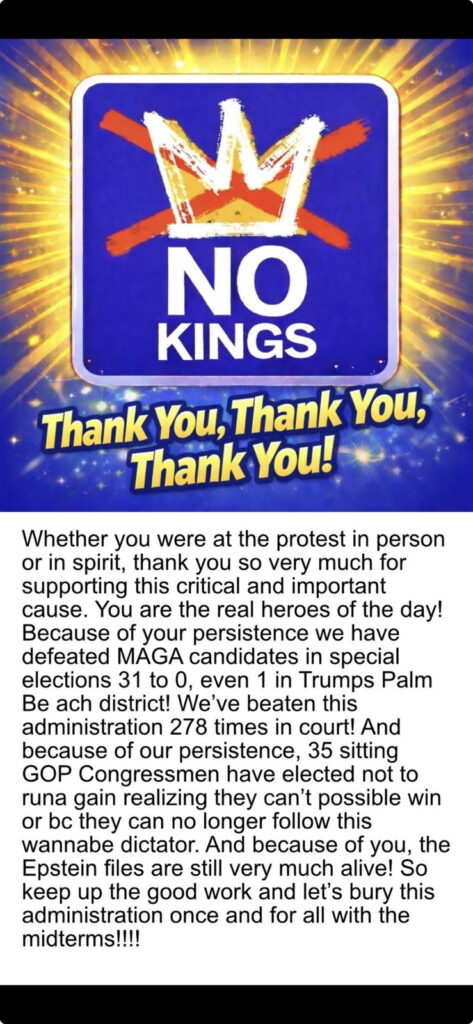
NO KINGS 3.0
by. JT Richardson April 2026
The No Kings 3 protests on March 28, 2026, marked a key moment in American civic resistance, drawing an estimated 8-9 million people across more than 3,300 events in all fifty states. This huge turnout—far exceeding previous protests—not only broke records for single-day demonstrations but also highlighted widespread public rejection of authoritarian trends in the Trump administration, from tough immigration policies to aggressive foreign actions like the Iran conflict.
Historic Scale
Crowd estimates showed the protest’s massive scope, merging city protests with local actions nationwide, including an impressive 100,000-200,000+ in Minneapolis-Saint Paul, MN.
Some of the estimated crowd sizes:
City/State Estimated Crowd Size
New York City, NY 350,000+
Boston, MA 180,000
Minneapolis-Saint Paul 100,000-200,000+
Seattle, WA 90,000-100,000
San Diego, CA 40,000-54,000
Providence, RI 35,000+
Pittsburgh, PA 15,000-20,000
Reno, NV 10,000+
Salt Lake City, UT 8,000
Birmingham, AL 7,000
Rahway, NJ 3,000
This scale reflects democratic vitality, with millions participating peacefully despite decentralized efforts. Hundreds and thousands of others in deeply red states joined in to voice their resistance and disapproval of the Trump administration. Even in small communities in red states like Arkansas, Florida, North Dakota, and others, citizens are pushing back.
Deeper Significance
These protests went beyond mere opposition, acting as a bold defense of constitutional norms against perceived king-like overreach—echoing warnings from the Founders. In a polarized era, their widespread support across red and blue states showed that civic activism remains a unifying force for accountability, voter engagement, and policy change on issues like immigration and endless wars. No Kings 3 was not just a spectacle; it was a rallying cry to energize grassroots power.
The Non-Attendees’ Role
However, millions stayed home, raising questions about free riding: are they relying on neighbors to carry the burden of resistance? While some cited safety concerns, work demands, or skepticism about the impact, this complacency risks weakening collective momentum—history shows protests succeed when participation feels personal and urgent, not vicarious. True democratic health requires broader support; silent backing alone lets others do the heavy lifting, possibly lessening the movement’s long-term influence. Do you really want to live in a country, in a world controlled by people like Donald Trump?
Why didn’t you show up? What are you doing to help? Why won’t you support your friends, your neighbors, your community, and your country? There are many options and ways to get involved and support the movement. It is time to get off the couch, out of the house, and pitch in! It takes all of us.
|